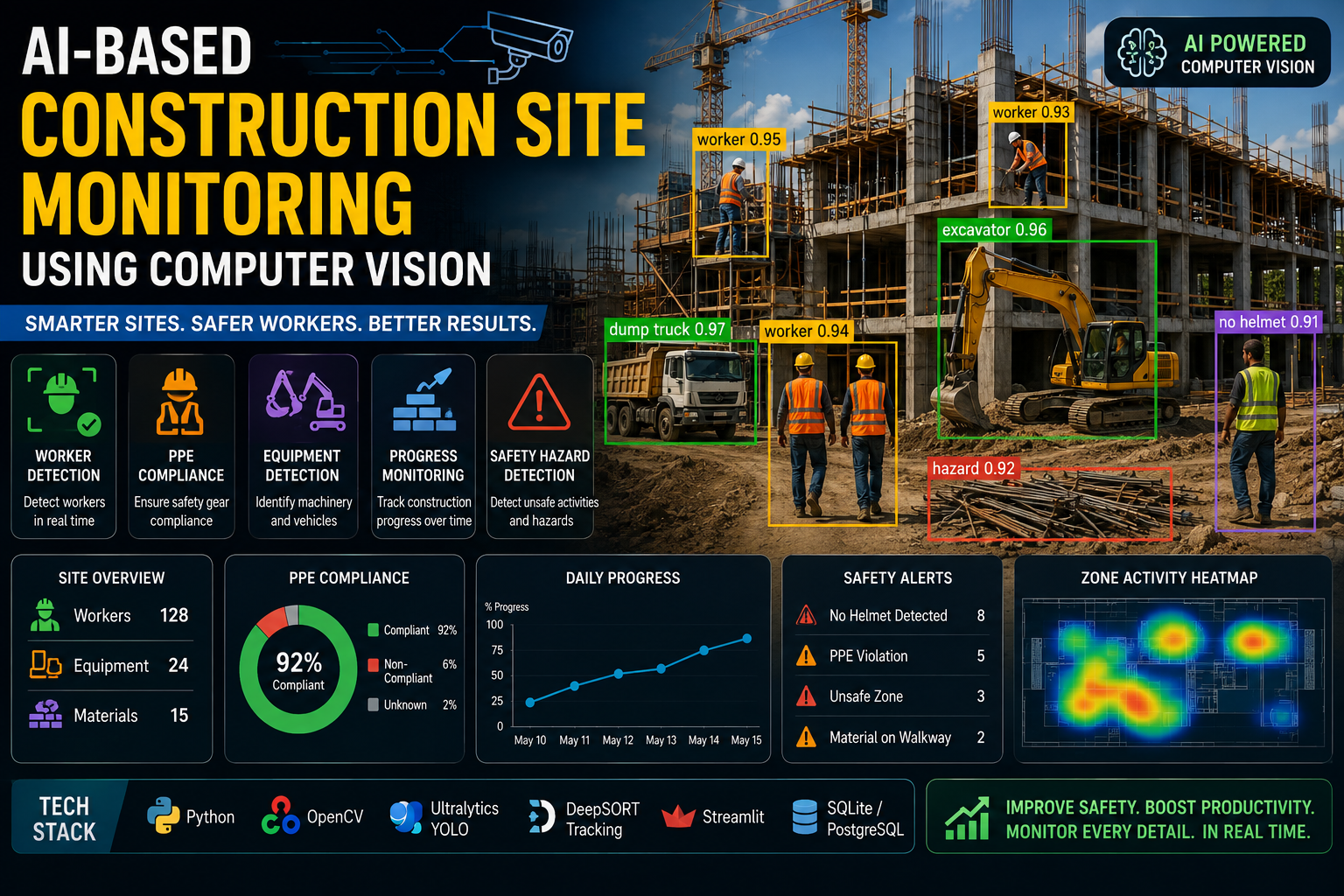
A construction site changes by the hour — materials arrive, crews move between zones, equipment gets repositioned, and risk conditions shift constantly. No safety manager or site supervisor can watch all of it, all the time, no matter how experienced they are. That’s the gap AI-based computer vision monitoring is built to close: a set of cameras that never blink, never get distracted, and never clock out, continuously scanning the site for hazards, tracking progress, and flagging problems the moment they appear.
For an industry where a single missed hazard can mean a serious injury and a single delayed shipment can cascade into weeks of lost schedule, that kind of constant vigilance isn’t a luxury — it’s becoming a competitive necessity. Here’s a full look at how this technology works, what it delivers, and what it takes to actually implement it.
What Is AI-Based Construction Site Monitoring?
At its core, this technology pairs cameras — sometimes supplemented with drones and sensors — with computer vision software that interprets what’s happening on site in real time. Rather than relying solely on periodic manual inspections or a supervisor’s limited line of sight, the system continuously analyzes video feeds to detect safety violations, track how work is progressing against the project plan, and monitor the location and use of equipment and materials.
It’s not replacing site managers — it’s giving them a second set of eyes that operates around the clock and catches things human attention alone inevitably misses.
The Core Technologies Involved
Computer Vision
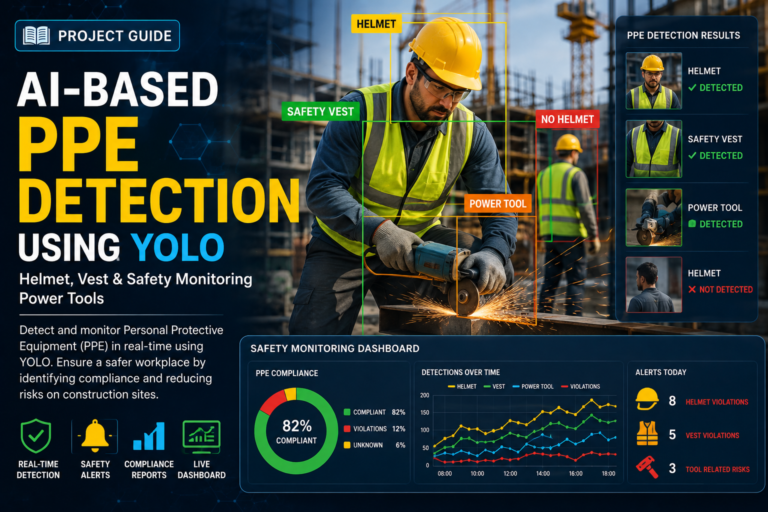
Computer vision is the engine that lets the system actually “understand” what a camera sees. On a construction site, this means recognizing whether a worker is wearing a hard hat, spotting when someone enters a restricted or unsafe zone, tracking the movement and use of heavy equipment, and counting materials to keep inventory accurate. It replaces manual visual checks — which are slow, inconsistent, and impossible to do continuously — with automated, always-on analysis.
Supporting Hardware
The typical setup combines several data sources: fixed cameras providing continuous video coverage of key areas, environmental sensors tracking conditions like temperature, humidity, and noise, and drones offering aerial views that fixed cameras simply can’t capture — particularly useful for large or multi-phase sites where ground-level coverage alone leaves gaps.
The Analysis Layer
Underneath all the hardware, deep learning algorithms process the incoming data, recognizing patterns and — increasingly — predicting problems before they fully materialize. Cloud computing handles the storage and heavy processing this requires, while mobile apps give supervisors and managers access to insights and alerts wherever they are, rather than requiring them to be physically on-site or at a monitoring desk.
Where This Technology Makes the Biggest Difference: Safety
Real-Time Hazard Detection
Because the system is always watching, it can catch dangerous situations as they develop — a falling object, equipment being operated unsafely, or an emergency exit that’s become blocked — and alert supervisors immediately rather than after the fact. That speed is what turns a potential incident into a near-miss instead of an accident.
Worker Behavior Monitoring
Beyond structural hazards, computer vision tracks how workers themselves behave on site: whether required safety gear like helmets and vests is being worn consistently, and whether anyone is entering zones marked as unsafe or restricted. This gives managers concrete, continuous insight into safety compliance rather than relying on the occasional spot check.
Getting Ahead of Accidents
Perhaps the most valuable safety capability is predictive rather than reactive — using historical incident data alongside real-time observation to flag risky patterns before they lead to an actual accident. This proactive layer is what separates modern AI monitoring from a simple security camera setup: it’s not just recording what happened, it’s trying to prevent what hasn’t happened yet.
Where This Technology Boosts Efficiency
Automated Progress Tracking
Rather than requiring a manager to physically walk the site and compare work against blueprints, AI systems can do this comparison automatically and continuously, flagging schedule delays early enough to actually course-correct rather than discovering them at the next scheduled review. This also means stakeholders can get accurate progress updates without needing to be on-site at all.
Smarter Resource Management
Computer vision keeps a running, automated tally of materials and equipment, alerting teams when supplies are running low or when something appears to be missing or misplaced. This kind of continuous inventory awareness helps prevent the costly work stoppages that happen when a crew shows up ready to work and finds the materials aren’t there.
Less Downtime Overall
By catching safety risks and equipment malfunctions early — before they force an unplanned halt — this monitoring approach directly reduces the downtime that erodes both schedules and budgets. Fewer surprises on site translates fairly directly into projects that finish closer to on time and on budget.
What It Takes to Implement This
Data Privacy and Security
Construction sites generate enormous volumes of video and image data, much of it involving identifiable workers and visitors — which makes privacy a genuine, not theoretical, concern. Responsible implementations require strict governance over data storage and access, strong encryption, secure infrastructure, and clear compliance with applicable data protection regulations. Skipping this isn’t just an ethical risk — it’s a legal and financial one.
Technical Limitations to Plan For
Computer vision performance depends heavily on image quality, and construction environments are famously hostile to clean data — dust, variable weather, and constantly moving equipment can all degrade detection accuracy. On top of that, training reliable AI models requires large and genuinely diverse datasets, real-time processing demands meaningful hardware investment, and sites with limited connectivity can struggle to move data fast enough for the system to be useful in the moment. None of these are dealbreakers, but they need to be planned for rather than discovered mid-rollout.
Cost and Integration Realities
The upfront cost of cameras, sensors, and AI infrastructure can be significant, and it’s a real barrier for smaller firms without large capital budgets. Beyond hardware, integrating these systems with existing site management software adds complexity, staff need real training to use the tools effectively, and ongoing maintenance is a recurring cost rather than a one-time expense. Return on investment is real, but it typically takes months rather than weeks to materialize — worth setting realistic expectations around from the start.
What Success Actually Looks Like
Some patterns show up consistently across real deployments:
- Safety gear compliance monitoring has measurably reduced accident rates on sites where AI cameras flagged missing helmets and protective equipment in real time rather than catching the gap after an incident.
- Material tracking has meaningfully cut theft and loss on sites where computer vision kept continuous watch over inventory, giving managers real-time visibility they didn’t have before.
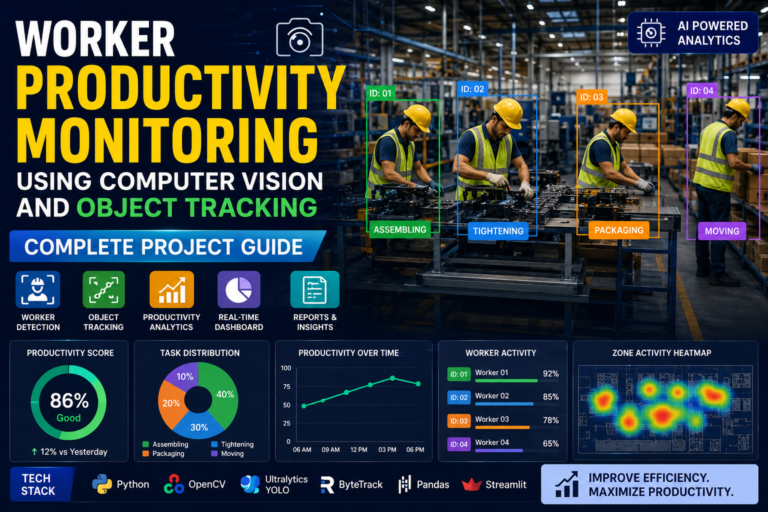
- Heavy equipment monitoring has helped catch unsafe operating patterns early, reducing both equipment damage and the delays that come with it.
Lessons From Sites That Struggled
Not every rollout goes smoothly, and the recurring issues are worth knowing in advance. Poor camera placement — bad angles that create blind spots — has undermined detection accuracy on more than one project, which underscores how much planning matters before installation, not after. Data privacy concerns have also surfaced repeatedly among workers, and the sites that handled this well did so through clear communication and transparent policies rather than treating it as a footnote. And staff adoption tends to lag without real, hands-on training — a one-time announcement about a new camera system is not the same as a team that actually trusts and uses the tool day to day.
Where This Is Headed
Sharper computer vision: Detection is getting more accurate and faster, with systems increasingly able to catch small changes and early-stage hazards rather than only obvious ones. 3D scene understanding is also emerging, allowing cameras to interpret complex, cluttered environments more reliably than flat 2D analysis alone.
Deeper integration with IoT and drones: Combining fixed cameras, IoT sensors sharing real-time site conditions, and drones covering large or hard-to-reach areas creates a genuinely comprehensive monitoring network — one where problems can be caught not just faster, but from angles and locations a single camera system could never cover alone.
Predictive analytics becoming standard: Rather than only flagging problems as they happen, AI is increasingly being used to forecast them — anticipating equipment failures or emerging safety risks before they materialize, giving teams a genuine planning advantage instead of a reactive scramble.
Is This Worth It for Smaller Firms?
It’s a fair question, given the upfront costs involved. The honest answer is that the calculus is shifting in favor of smaller adopters as camera hardware gets cheaper and cloud-based AI services reduce the need for heavy in-house infrastructure. The sites that get the best return tend to start narrow — one high-risk zone, one specific safety concern, one area of frequent material loss — prove the value there, and expand deliberately from that foundation rather than trying to instrument an entire site on day one.
Final Thoughts
AI-based construction site monitoring isn’t about replacing the judgment of experienced site managers — it’s about giving them continuous, reliable visibility into a site that’s simply too large, too dynamic, and too fast-moving for any one person to fully observe on their own. Done well, with real attention to privacy, camera placement, and staff training, it delivers measurable improvements in both safety outcomes and project efficiency.
The construction sites that benefit most from this technology aren’t necessarily the ones with the most cameras — they’re the ones that treat the resulting data as a tool for making faster, better-informed decisions, and back it up with the training and trust needed for the whole crew to actually work with it rather than around it.