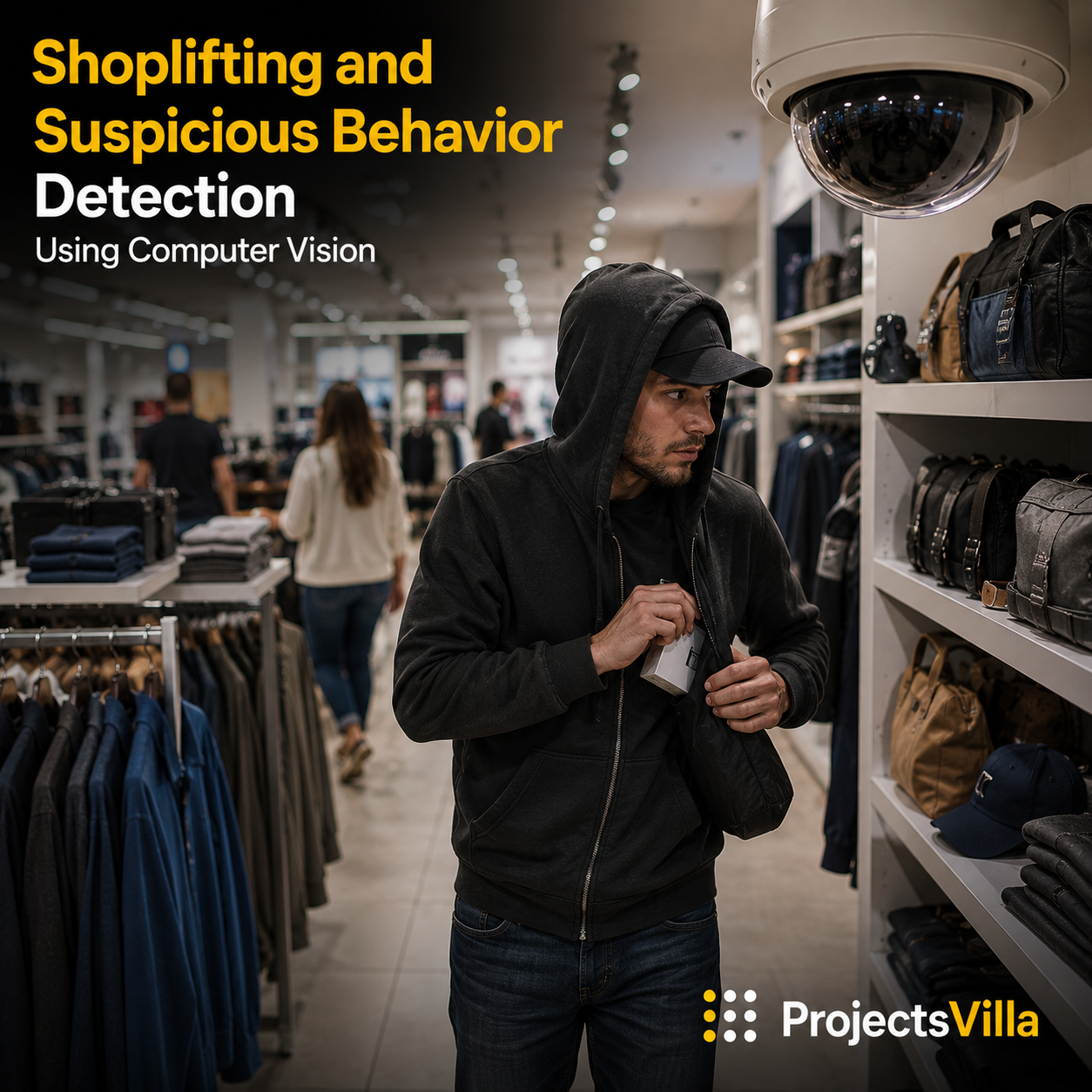
Shoplifting and Suspicious Behavior Detection Using Computer Vision
₹2,999.00
Instant Digital Delivery
- Downloadable Digital Product
- Source Code Included
- Pre-trained Models Included
- Setup Documentation Included
- Secure Payment
Build an intelligent AI-powered retail surveillance system that analyzes video footage to identify potentially suspicious activities and unusual customer behavior.
This computer vision project demonstrates how existing CCTV footage can be processed to observe movement patterns, detect activities of interest, and assist in identifying situations that may require human attention. It provides a practical foundation for developing AI-based retail security and loss-prevention solutions.
Key Features
- Real-Time Video Monitoring — Analyze live or recorded surveillance footage.
- Computer Vision Analysis — Process video frames to identify people and relevant activities.
- Suspicious Activity Detection — Flag behavioral patterns that may require further inspection.
- Retail Security Applications — Designed around common challenges in stores and retail environments.
- Visual Monitoring — Present detection results directly on the video feed.
- Real-Time Processing — Demonstrates an AI-assisted approach to continuous surveillance.
- Customizable Source Code — Modify and extend the system for different surveillance scenarios.
Technologies Used
- Python
- OpenCV
- Computer Vision
- Video Processing
- AI-Based Activity Analysis
Who Is This For?
Suitable for B.Tech/M.Tech students, Python developers, AI/ML learners, computer vision enthusiasts, researchers, and innovators interested in surveillance, retail analytics, and intelligent video-processing applications.
What You Get
Get the project source code for a computer-vision-based suspicious activity monitoring system. Study the implementation, understand the underlying workflow, and customize it for your own academic, research, or prototype requirements.
Learn Computer Vision • Analyze CCTV Footage • Build Intelligent Surveillance
Educational and development project. Detection results should be treated as alerts for human review and not as definitive proof of shoplifting or criminal behavior.